Planetary science6 min read
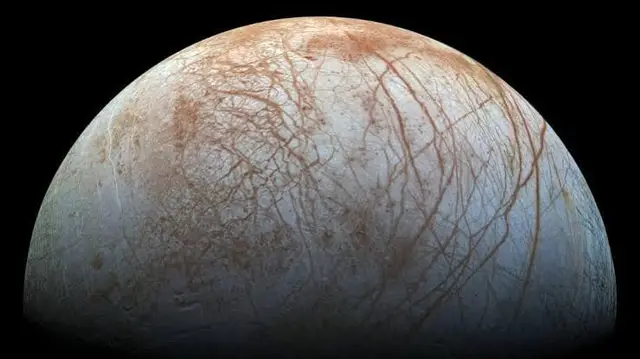
Enceladus is still venting its ocean
Fresh analysis of the plume feeding Saturn's E ring finds complex organics and phosphates — the chemistry of habitability, sampled from orbit.
Read discoveryThe record
The universe is constantly revealing something new.
Read the record
The first deep fields from Webb kept turning up galaxies that seemed too massive, too ordered, too soon after the Big Bang. New observations are starting to explain why — or change what we think the first hundred million years were like.
Read discoveryLatest discoveries
Space phenomena
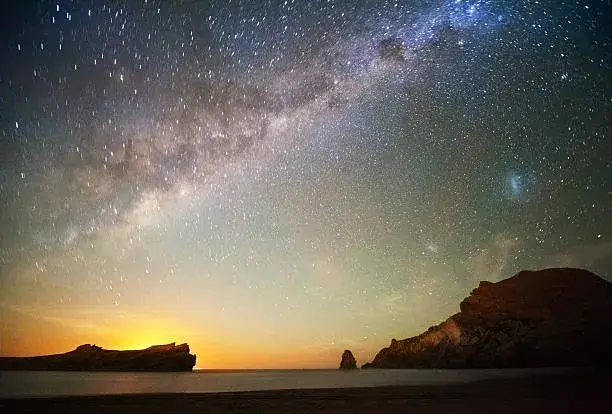
The sky keeps a schedule. Some of it is written down.
The moon's shadow crossing Earth — a coincidence of size and distance that will not last forever.
Earth running through the debris trails of comets, twice a year, predictably.
The deaths of massive stars — bright enough to outshine their galaxies, brief enough to miss.
Solar wind meeting magnetic field: curtains of light over the poles, visible further south than usual this decade.
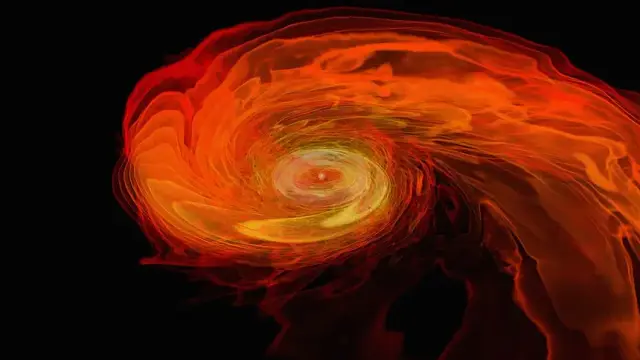
Spacetime itself, ringing after a collision of black holes a billion light-years away.
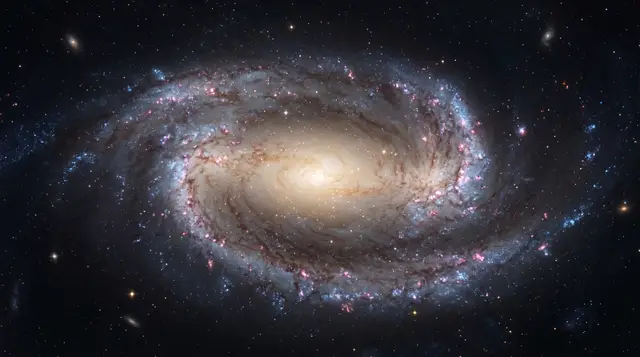
Galaxies passing through one another. Stars almost never touch; the gas always does.
Explainers
The ideas behind the headlines, explained without shortcuts.
Mostly by watching a star blink, wobble, or bend — three subtle signatures, three Nobel-worthy techniques.
Mass curves spacetime, spacetime curves light. The universe's largest objects are also its best telescopes.
Light travels fast, but space is vast. Every view of the sky is a view of history — some of it nearly the beginning.
Its mass decides everything: a slow fade, a violent explosion, or a collapse that never finishes.
Somewhere tonight, something is being observed for the first time. Read along with us.